ASPET is proud to announce the selection of 15 awardees to participate in the 2026-2027 Washington Fellows program. The mission of the Washington Fellows program is to enable developing and early-career scientists interested in science policy to learn about and become more engaged in public policy issues. Get to know this year’s class.
Gopakumar Changarathil – University of Texas Health Science Center at San Antonio

Gopakumar (Gopu) hails from Palakkad, Kerala, in South India. He earned both his bachelor’s and master’s degrees from Bharathiar University, India, before being awarded the prestigious Japanese Government "Mombukagakusho" (MEXT) Fellowship to pursue his PhD at the University of Tsukuba, Japan, where his research focused on tissue stem cell aging. Following graduation, he moved to San Antonio, Texas, for postdoctoral training and is currently a researcher in Dr. Lynette Daws' lab at the University of Texas Health Science Center at San Antonio. His work investigates the role of the astrocytic OCT3 transporter in astrocyte homeostasis and amphetamine-type stimulant use disorders. He is currently supported by Addiction T32 fellowship, directed by Dr. Charles France. Beyond the lab, Gopu is the Director of the non-profit organization The House of Sree, where he leads initiatives to distribute free, life-saving doses of naloxone to queer/LGBTQ+ community centers of South Texas. He is also an accomplished professional classical dancer who actively performs and teaches Bharatanatyam across Texas. As an ASPET Washington Fellow, Gopu is dedicated to advancing science communication for diverse audiences and advocating for the critical importance of scientific research funding.
Alex Chapman – Michigan State University
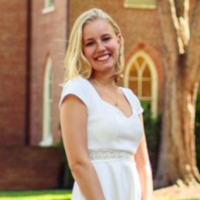
Alex grew up in Richmond, Virginia and received her bachelor's degree in Behavioral Neuroscience and Spanish at Randolph-Macon College. During her time at Randolph-Macon, she participated in research projects with the neuroscience department and helped organize several outreach initiatives to assist the local community and increase youth involvement in STEM fields. Currently, Alex is a 4th year Neuroscience PhD Candidate at Michigan State University under the mentorship of Dr. Geoffroy Laumet. Alex’s project aims to investigate how different cell types influence migraine-like behaviors in preclinical models of migraine, hopefully leading to the identification of novel therapeutic targets to treat the disorder. Outside of research, Alex participates in community outreach programs, mentors undergraduate students, and is an active member of MSU’s Graduate Student Union. As an ASPET Washington Fellow, Alex is eager to learn more about public policy, strengthen her science communication abilities, and develop skills that will prepare her for a career advocating for scientific research and public health policies.
Emily Cronin – Wake Forest University
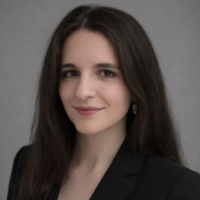
Emily is from Cleveland, Ohio. She received her bachelor’s degree in psychology from Creighton University. While at Creighton, her love of science and inquiry developed through participation in institutional research programs under the guidance of Dr. Dustin Stairs. After completing her undergraduate education, she moved to North Carolina to continue cultivating her passion for research. Emily is currently pursuing a PhD in Integrated Physiology and Pharmacology through the Translational Neuroscience Department at the Wake Forest University School of Medicine. Under the mentorship of Dr. Paul Czoty, her research focuses on using animal models to develop novel pharmacotherapies for substance use disorders, specifically alcohol and cocaine use disorders. In addition to research, she actively participates in community outreach through organizations like End Overdose, Students for Sensible Drug Policy, and the Twin City Harm Reduction Collective. As an ASPET fellow, Emily hopes to learn how to translate her passion for science and substance use research into advocating for continued biomedical research funding and effective drug policy.
LinkedIn: Emily Cronin
Erome Hankore – Wayne State University
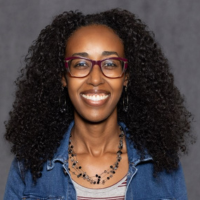
Dr. Erome Hankore is an Assistant Professor in the Department of Chemistry at Wayne State University. She earned her PhD in Chemistry from the University of Nebraska–Lincoln, where she specialized in chemical biology and biocatalysis. During her doctoral studies, Dr. Hankore’s research encompassed genetic code expansion, engineering biocatalysts for biofuel production, and the development of kinase assays for drug discovery. Following her PhD, Dr. Hankore joined the College of Pharmacy at the University of Kentucky as a postdoctoral research scholar, where she investigated the biosynthesis of anticancer natural products and enzyme engineering for adjuvant biosynthesis. Research in the Hankore laboratory focuses on addressing challenges in three key areas: sustainability, kinase-targeted drug development, and natural product discovery and the elucidation of their biosynthetic pathways. Her lab integrates biochemical and chemical biology approaches to uncover fundamental mechanisms while developing tools to advance biomedical and environmental research. In addition to her research, she has actively participated in outreach initiatives that engage the general public, public servants, and scientists in advancing science communication. As an ASPET Fellow, Dr. Hankore hopes to learn how to leverage her experience as an educator and researcher to develop a deeper understanding of the policies that shape scientific discovery and contribute to efforts that strengthen the relationship between science, government, and society.
LinkedIn: Erome Hankore
Joseph Hennessey – Medical College of Wisconsin
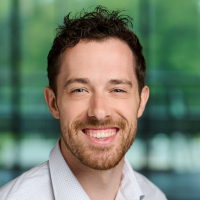
Joe was born in Omaha, Nebraska and completed his undergraduate degree at Marquette University in Milwaukee, Wisconsin. There, he majored in Biomedical Sciences and Philosophy and worked as a research assistant in several behavioral neuroscience laboratories. Following a gap year working with Dr. John McCorvy studying interactions of psychedelics with G-protein coupled receptors, Joe began pursuing his MD/PhD degrees in the Medical Scientist Training Program at the Medical College of Wisconsin. Joe's graduate work thus far has been focused on developing rodent behavioral models of psychedelic-mediated enhancement of cognitive flexibility. Joe is highly interested in psychedelics as potential therapeutics and this interest has led him into science policy advocacy, with particular interests in reducing barriers to research with Schedule I substances (such as psychedelics) and ensuring stability of federal funding for scientific research.
Genevieve Hunn – Vanderbilt University
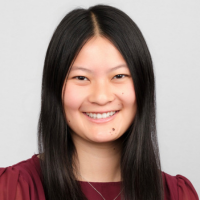
Gigi Hunn was raised in Morrison, Colorado and earned her bachelor’s degree in neuroscience and psychology with a minor in business from the University of Colorado Boulder. Her longstanding interests include investigating neurological disorders and developing new approaches to treating symptoms. Before starting graduate school, she researched cerebellar stroke and had presented her findings to legislators and policymakers at the Colorado State Capitol. Gigi is currently a 3rd year PhD candidate in the Department of Pharmacology at Vanderbilt University. Under the mentorship of Dr. Colleen Niswender, her thesis project is focused on designing and testing novel antisense oligonucleotides to target the repressive activity of microRNAs that are dysregulated in Rett syndrome. She is also engaged in clinical opportunities where she learns from individuals affected by this disorder. Outside of lab, she enjoys organizing professional development events through Vanderbilt Women in Science and Engineering, leading science communication workshops, and volunteering in her community, as well as traveling and exploring the outdoors. As an ASPET Washington Fellow, Gigi is excited to learn more about public policy, advocacy for scientific research, and science communication.
LinkedIn: Genevieve Hunn
Modesta Karikari – St. John's University
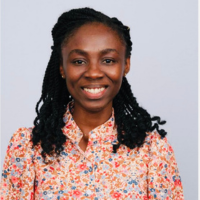
Modesta was born and raised in Kumasi, Ghana, where she earned her Doctor of Pharmacy at Kwame Nkrumah University of Science and Technology. She began her career as a clinical pharmacist at Tafo Government Hospital, providing direct patient care, and spent five years as a Regional Customer Experience Project Coordinator with Zipline International, leading and coordinating regional projects supporting the drone delivery of vaccines, blood products, and emergency medicines to remote health facilities across five African countries. That work gave her a firsthand view of how gaps in medicine access and supply chains cost lives, and it drew her toward research that could translate more directly into better therapies. She is currently pursuing a PhD in Pharmaceutical Sciences at St. John's University, Queens, New York. Under the mentorship of Dr. Saurabh Agarwal, she studies the JAK2/STAT3 signaling axis as a therapeutic target in high-risk pediatric neuroblastoma. Alongside her research, Modesta mentors undergraduate researchers and has led community health initiatives in Ghana, organizing disease-awareness talks and cardiovascular screenings for underserved populations. As an ASPET Washington Fellow, Modesta hopes to build on this experience at the intersection of laboratory science and real-world care, advocating for policies that expand global access to medicines and strengthen federal funding for biomedical and pediatric cancer research.
M. Victoria LaChapelle-Sproat – University of Maryland, Baltimore County
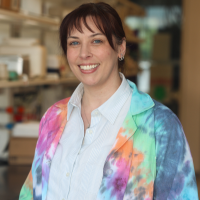
Tori was born and raised in Baltimore, Maryland. Before entering academia, she built a career supporting new families as a breastfeeding peer counselor for the Onslow County WIC program and later as a private practice lactation consultant. Her work with patients experiencing perinatal mood disorders sparked a curiosity that carried her from Coastal Carolina Community College to Columbia University, where she earned a B.A. in Neuroscience and Behavior. While there, she became fascinated with the gut-brain-axis and published an article on its relationship with infant feeding in Grey Matters, Columbia’s undergraduate neuroscience journal. She is now a PhD candidate in Neuroscience and Cognitive Sciences at UMBC. Under the mentorship of Dr. Tara LeGates, Tori investigates how estradiol shapes reward behaviors and their underlying synaptic mechanisms, which may shed light on women’s heightened vulnerability to depression during periods of rapidly cycling estrogen, such as the postpartum period. As a G-RISE Fellow, an NIH-supported training program for PhD students committed to diversifying the biomedical research workforce, she has sharpened her research skills through professional development workshops, career mentorship, and a close cohort of peers. Beyond the bench, Tori is a dedicated science communicator and advocate. She has received awards for scientific presentations, taught middle school science camps, and helps run her lab’s Instagram. She serves as Secretary of the Graduate Student Association, and organizes with the UMBC Graduate Student Workers Union, whose years-long lobbying campaign won them state recognition last year. As an ASPET Washington Fellow, Tori hopes to learn how to bridge the lab and the legislature, translating scientific evidence for policymakers who decide how and whether science gets funded, at a moment when scientific funding and institutions face mounting pressure.
LinkedIn: M. Victoria LaChapelle-Sproat
Abdul-Azeez Lanihun – Howard University
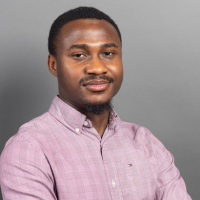
Abdul-Azeez is a PhD candidate in pharmaceutical sciences on the regulatory affairs and policy track at Howard University and a Predoctoral Fellow at the National Institutes of Health. He earned his BSc (Hons.) in pharmacology at the University of Lagos, Nigeria, and holds MS degrees from Southern Illinois University Edwardsville and The Robert Gordon University, Aberdeen. His research advances the clinical pharmacokinetics of biologic drugs, bridging bioanalytical assay development, computational modeling, and regulatory strategy to help new therapies reach patients more effectively. He has received numerous awards, including the Commonwealth Master's Scholarship, and serves as a STEP Committee Lead at the International Society of Pharmacometrics. He also mentors aspiring pharmacologists through career seminars across Nigerian universities and is active in his community as a Red Cross volunteer and pharmacy benefit manager (PBM) reform advocate. As an ASPET Washington Fellow, Abdul-Azeez hopes to build on his pharmacology and regulatory science background to advocate for evidence-based science policy reforms that expand access to affordable and innovative therapies.
LinkedIn: Abdul-Azeez Lanihun
Vanessa Lopez – University of Washington
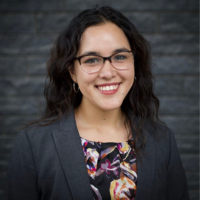
Vanessa A. Lopez was raised in Ventura, CA. She earned her bachelor's degree in Chemistry and minored in Biology and Chicano Studies. Her studies gave her an interdisciplinary approach to science and environmental justice. She was heavily inspired by her county's pesticide usage and the history of farmworker rights and experiences of pesticide exposure. Additionally, she was a lead tutor in both drop-in and classroom-led tutoring. She was an active member of LSAMP and SACNAS, participated in undergraduate research with her organic chemistry professor, Dr. Awad, and spent a summer at the University of New Mexico studying prenatal alcohol exposure with Dr. Cunningham in the Neuroscience department. She earned a department honors award in Chemistry in 2018 and then came to the University of Washington for her PhD in Medicinal Chemistry. She worked under the guidance of Dr. Libin Xu, who supported her interests in toxicology. She studied Benzalkonium Chlorides (BACs) and their impact on the gut microbiome and liver metabolism via the gut-liver axis. She was awarded the Environmental Toxicology and Pathology training grant for 3 years, as well as the ARCS fellowship for 3 years. She presented her research to the NIEHS Microbiome workshop in 2020 and gave an oral presentation at ASPET in 2023. She cares deeply about access and opportunity in higher education and has mentored several students. She is now a Postdoc in Dr. Xu's lab and is studying microbiome-dependent versus independent effects of BAC exposure in mouse models. Her long-term goals are to study environmental toxicant impacts on vulnerable communities. Her interdisciplinary approach and insight into environmental justice motivate her to work toward furthering the scientific understanding of unjust chemical exposures and their effects on the health of vulnerable communities. She is honored to be an ASPET Washington Fellow and is eager to learn how to merge her interests into public policy and impact.
Harlie McKelvey – Wake Forest University
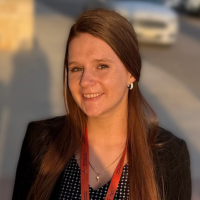
Harlie is from Dravosburg, Pennsylvania. She received her bachelor’s degree in Neuroscience at Eastern Michigan University where she worked in the lab of Dr. Thomas Mast. Eager to pursue more lab experience after graduation, she accepted a position as a research technician in Dr. Jing Hong Wang’s lab at the UPMC Hillman Cancer Center where she worked for two years. During this time, she also volunteered with the local harm reduction coalition, and eventually she decided to combine her love of science with her interest in improving public health in the substance use community and further her education at the doctoral level focused on addiction neuroscience. Currently, she is a doctoral candidate in the Neuroscience PhD program at Wake Forest University School of Medicine, working in the lab of Dr. Robert Gould. Under his mentorship, she has studied how spontaneous morphine withdrawal affects sleep and brain activity using electroencephalography (EEG). Building on this foundation, she aims to assess how potential and current medications for Opioid Use Disorder influence sleep architecture, brain activity, cognition, somatic withdrawal signs, and self-administration behaviors during opioid withdrawal, shifting the focus of the withdrawal phenomenon to include current untreated symptoms, such as sleep disturbances and cognitive impairments. In addition to research, Harlie is Co-President of Wake Forest’s End Overdose Chapter, Student for Sensible Drug Policy, and Volunteer Coordinator for Brain Awareness Council. While Harlie is passionate about science, she realizes that scientific discovery alone is not enough to improve public health. Meaningful public impact relies heavily on effective communication amongst scientists, clinicians, the community, and policymakers. As an ASPET fellow, Harlie hopes to develop a deeper understanding of how scientific evidence is incorporated into the policymaking process and how researchers can more effectively communicate with stakeholders outside the scientific community.
LinkedIn: Harlie McKelvey
Pascaline Niyonshuti – University of Oklahoma Health Campus
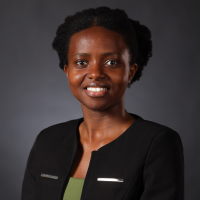
Pascaline was born and raised in Rwanda, where her involvement in community service, debates, and girls’ empowerment initiatives, along with her participation in the Global Give Back Circle, sparked an early passion for advocacy and science-informed public policy. She earned her bachelor’s degree in integrated sciences from the University of Nebraska-Lincoln. During her college time, she further cultivated her passion for science and advancing public health outcomes. She served as an undergraduate research assistant fellow in the Undergraduate Creative Activities and Research Experience (UCARE) program, which fostered her interests in pharmacology. She is currently pursuing a PhD in the field of drug transporters in the Department of Pharmaceutical Sciences at the University of Oklahoma Health Campus under the mentorship of Dr. Wei Yue. Her research focuses on the regulation of two clinically important transporters, OATP1B1 and OATP1B3, and assessing OATP-mediated DDIs using a multidisciplinary approach encompassing molecular biology and physiologically based pharmacokinetic (PBPK) modeling. She enjoys mentoring high school, undergraduate, and fresh graduate students interested in pursuing careers in scientific research. Beyond research, she actively engages in community and professional service through the American Association of Pharmaceutical Scientists (AAPS) student chapter and volunteer work with the University of Oklahoma Big Event, outreach at the Mobile Home Community at Edmond, Oklahoma, and the Regional Food Bank of Oklahoma. As an ASPET Washington fellow, Pascaline aspires to deepen her understanding of policy development and implementation, apply her research experience to inform science-based policy decisions, and advocate for continued funding of biomedical research.
Aditi Rudrashetty – University of Mississippi Medical Center
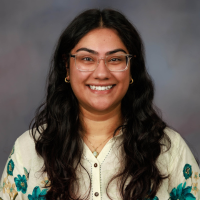
Aditi was born in Cleveland, Ohio, and raised in Charlotte, North Carolina. She received her Bachelor of Science in Neuroscience with a concentration in Cognitive and Behavioral Neuroscience from the University of South Carolina, graduating with Leadership Distinction in Research. While at USC, she developed her research foundation as a Ronald E. McNair Scholar, conducting independent research on how college students perceive addiction and substance use, work that was later published in Athena: Undergraduate Research and Literary Journal. Before pursuing her PhD, Aditi trained as an Emergency Medical Technician, an experience that shaped her understanding of the gap between what science knows about addiction and what frontline providers are equipped to act on. She is currently a third-year PhD candidate in Neuroscience at the University of Mississippi Medical Center, where she studies the relationship between sleep, cognition, and relapse vulnerability in alcohol use disorder under the mentorship of Drs. Donna Platt and Lais Berro. Alongside her dissertation, she serves as an Ambassador for Students for Sensible Drug Policy, advocating for evidence-based drug policy while continuing her bench research. As an ASPET Washington Fellow, Aditi hopes to build on her experience as a researcher, healthcare provider, and advocate to learn how to translate scientific evidence into policy, ensuring that the research happening in laboratories across the country reaches the rooms where decisions about funding, treatment, and public health are actually made.
LinkedIn: Aditi Rudrashetty
Ankit Sood – University of Minnesota
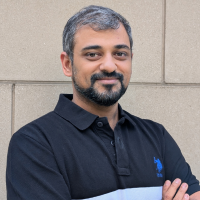 Ankit was born and raised in New Delhi, India. He received his bachelor’s degree in microbiology from Delhi University. His time at the University fueled his curiosity and love for science, and led him to move to Mumbai, where he enrolled for a PhD at the Tata Institute of Fundamental Research under the guidance of Dr. Vidita Vaidya. His research was focused on understanding how the brain responds to different stressors in male and female rats, and the brain mechanisms underlying early life stress mediated vulnerability to psychiatric disorders during adulthood. For his postdoctoral training, Ankit initially joined Dr. Jocelyn Richards group at the University of Minnesota and is currently working in the laboratory of Dr. Yanaira Alonso Caraballo. Ankit’s postdoctoral research has focused on understanding the brain mechanisms behind reward and motivated behaviors with the overall goal of better understanding disorders like addiction. Throughout his research career both in India and the USA, Ankit has been actively involved in outreach and advocacy efforts via volunteer work at the institutional level, serving on different committees, and the Citizens Review Panel. As an ASPET fellow, Ankit hopes to learn how to leverage his experience as a researcher to advocate for the importance of sustained, long-term funding for biomedical research.
LinkedIn: Ankit Sood
Taylor Zimmerman – Medical College of Wisconsin

Taylor Zimmerman was born and raised in Campbellsport, Wisconsin. She received her bachelor's degree in Biochemistry, summa cum laude, from the University of Wisconsin–Milwaukee. As an undergraduate she joined the Milwaukee Institute of Drug Discovery under the mentorship of Dr. Alexander (Leggy) Arnold, where she evaluated novel imidazodiazepines for the treatment of neuropathic pain and contributed to a lead compound screening pipeline, an early introduction to how far a molecule must travel before it reaches a patient. She is now a PhD candidate in the Department of Pharmacology and Toxicology and the Cardiovascular Center at the Medical College of Wisconsin, and an American Heart Association Predoctoral Fellow. Under the mentorship of Dr. Michael Widlansky, her research investigates how mitochondrial fission-1 protein and disrupted mitophagy drive vascular dysfunction in type 2 diabetes. Outside the laboratory, she is the founder and CEO of Clinical Connections, a nonprofit that improves patient access and education to clinical trials. As an ASPET fellow, Taylor hopes to gain a working understanding of how research funding and the regulation of therapeutics are shaped. She hopes to develop the skills to translate scientific expertise into clear, persuasive advocacy for biomedical research and for the patients who ultimately depend on it.