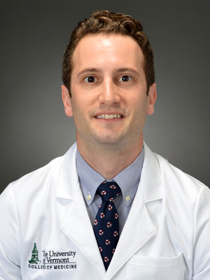
 Jonathan N. Flyer, M.D., is an Assistant Professor at the Robert Larner, M.D. College of Medicine at the University of Vermont. He is also appointed as a Pediatric Cardiologist at University of Vermont Medical Center in Burlington, Vermont, serving the greater regional UVM Health Network, and has a non-clinical research affiliation with Boston Children’s Hospital. Dr. Flyer received his M.D. from Rutgers University. He completed his residency in Pediatrics from Yale School of Medicine and fellowship in Pediatric Cardiology from Columbia University. He is a Fellow of the American College of Cardiology (FACC). Dr. Flyer has been recognized as a “Healthcare Hero” at the University of Vermont for clinical excellence, compassion, and dedication to extraordinary family centered care.
Can you tell us about your responsibilities for your current appointments? How you balance your time between your clinical and research responsibilities?
I am a board-certified pediatric cardiologist with main clinical care and educational responsibilities at the University of Vermont Children's Hospital and College of Medicine in Burlington. My everyday work concentrates on evaluation and assessment of pediatric cardiovascular health. I am privileged to work with an outstanding team of physicians, nurses, sonographers, medical trainees, and staff, who provide compassionate and family-centered comprehensive pediatric cardiology care for children. My time is mainly dedicated to clinical care, but that is often where I find interesting questions, many of which may serve as a starting point for novel pediatric cardiovascular research.
What motivated you to choose Pediatric Cardiology? Thinking retrospective, would you have done anything differently?
This is a common question asked to me by almost every medical student. My answer over the years has become quite straightforward: I love the cardiovascular exam, cardiac anatomy and the physiology puzzle, and building long-term relationships with patients and families, many of which may start with an acute illness of a child, but often progress to a good health outcome. Reflecting on my path, I think it would have been very useful to have additional training in biostatistics—this is a common weakness for many clinicians interested in research, and I wish I had the foresight to address it during my training. And I probably would have hiked the Appalachian Trail prior to starting medical school – once you start a long period of training, it can become challenging to find time for lengthy outdoor adventures.
You hold multiple appointments and are actively involved in community services, what are some key strategies/skills that helped you succeed?
I think there are a few key strategies that have helped, none of which are specific to the medical field, including: careful time management, prioritization and efficiency of tasks, and keeping an open mind to new opportunities even if the benefit is not initially clear. Success is tough to define, but when I feel naturally engaged and energized by the work, then I think I am on the right path. Also, I believe honest feedback and mentorship from people you trust, combined with support from those who know you well, is essential.
What role has mentorship played in your career advancement, and what is your mentoring philosophy?
Mentorship has played an incredibly important role in my entire life and especially in medicine. I think it is probably the single most underrated component of medical career advancement, which is why I typically advocate for it so much. I try to seek mentors in many different arenas—clinical, education, research, both locally and nationally—because there is always more to learn from others. Peer mentorship is also very helpful, and I have found the Cardiovascular Research Institute of Vermont to be incredibly supportive. My philosophy is to encourage everyone to actively seek mentorship, and then acknowledge that it is never too early to start paying it back. Seeing the success of my mentees has been very rewarding and special in a whole new way.
As a “Healthcare Hero,” do you advocate for some policies and practices for cardiac and mental health? What strategies you generally use during stressful situation?
The “Healthcare Hero” award was a very humbling, and generous anonymous acknowledgment from a patient's family regarding care that I had provided. I am not certain the specifics of the care, but I do think it was related to prenatal cardiac counseling, which is where we do some of our most challenging, stressful, and important work. I think that in many stressful scenarios it is important to acknowledge how difficult having a sick loved one can be. My belief is that patience, compassion, and small acts of kindness towards children and families always helps to build a strong relationship.
In your view, what was the breakthrough for the management of congenital heart disease in the last decade?
I think my review of congenital heart disease care is somewhat skewed to the current era, given that my pediatric fellowship training started in 2013. There have been so many innovations—congenital heart surgery, cardiac catheterization, non-invasive imaging, just to name a few—many of which have been remarkable over the past decade. As the field advances, the pediatric quality improvement work done throughout regional cardiac care centers has been inspiring. And since this is a pharmacology interview I would say that perhaps one of the single most important medications to change the field of congenital heart disease is prostaglandin E2!
You use telemedicine for your consultations. What is your opinion about science and cardio-twitter as a communication tool for health-related topics?
We currently consult via telehealth for a number of regional pediatric centers in our network. We read electrocardiograms and echocardiograms to provide expertise in pediatric cardiology for those medical homes that do not have a pediatric cardiologist onsite. I think that our ability to provide these services increases the quality of work being done and allows our team to help standardize the pediatric cardiology care in our health care region. I do not have much experience yet with cardio-twitter as a communication tool but I do advocate for timely dissemination of high quality science and factually accurate literature.
What advice do you have for early-career scientists looking for opportunities in the field of healthcare?
Get out there, and go have fun! I think now is an incredibly exciting time to learn, teach, and innovate throughout the healthcare and science fields. One piece of advice is that building good relationships with colleagues is the key to teamwork and shared success. Being part of a team making breakthroughs has been the most fun for me.
In your opinion, what are some essential steps that can improve communication and collaboration between basic and clinical scientists?
I would emphasize direct, in-person conversations more. I think getting to know people on a personal level really helps, and demonstrating genuine interest in others work is going to inspire new questions.
What parts of your job do you enjoy most and why? What is one thing you wish you could change about your job?
If I may, I think I will answer those in the reverse order, so we end on a positive note.
If I could change one thing, I would advocate for more research support in pediatrics, relative to the current healthcare resource distribution. Many health problems start in childhood, but we fall short of addressing those until late in adulthood, and I am hopeful that the UVM Health Network will help start to change this trend with a population care approach. And although I am very lucky to live in Vermont, I would still move the chair lift closer to the hospital.
I really enjoy spending time with patients and families, helping navigate challenging moments, and tackling difficult tasks together. I love asking the question “why?” and seeking answers to improve cardiovascular healthcare for children. And I really love that in an academic setting, I can be inspired by learning from established clinicians, feel motivated by my peers, and work hard to encourage the next generation of physicians and scientists.